Esthétique et technique, un ravalement de façade fait pour durer

Rénovation des façades d’un pavillon au Raincy (93)
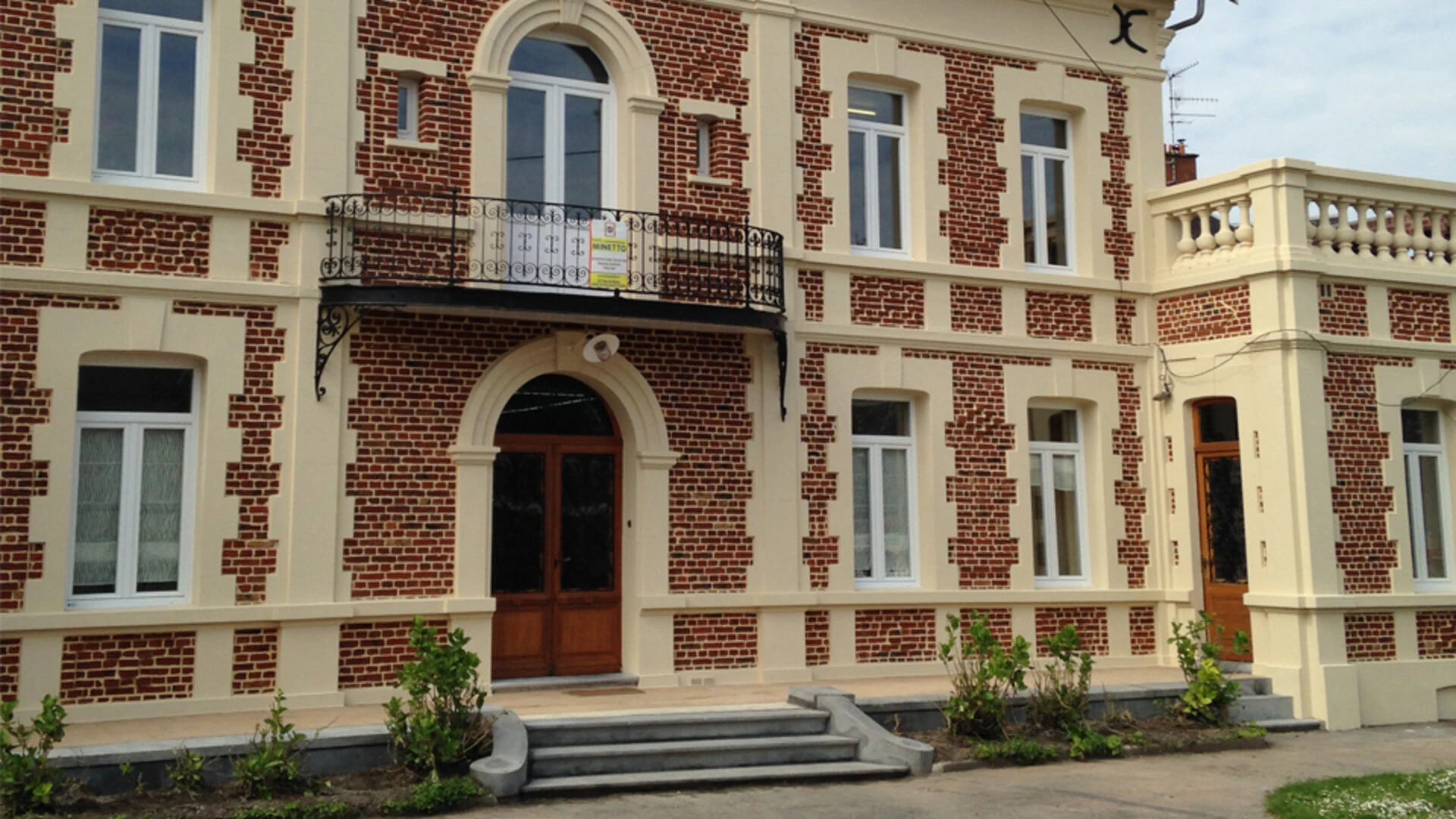
Pour la réfection des façades de ce pavillon de la banlieue parisienne, l’entreprise de ravalement Da Silva a eu une approche technique et décorative. Soit, un enduit qui assure la tenue du revêtement dans le temps avec une finition ton pierre à la chaux aérienne en phase avec les attentes du client.


The context
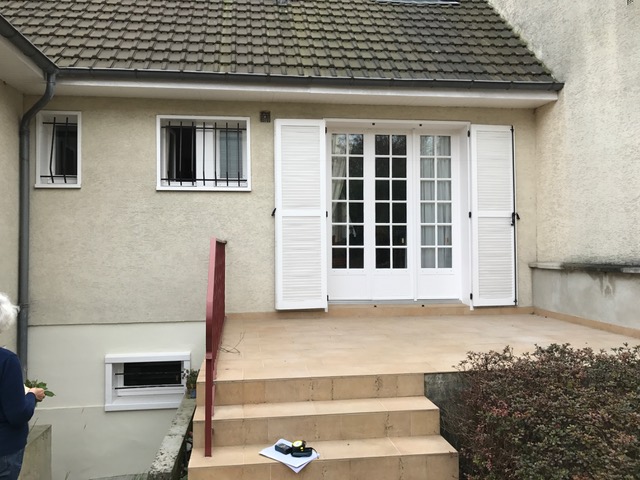
Typical of suburban residential areas in the Paris region, this house in Le Raincy (93), built in the 1970s/80s, was starting to show signs of wear: “The façade was deteriorated, it had stains and some cracks. We also needed to redo the waterproofing of the adjoining wall,” explains Jean Mercier, the owner.
A decision was therefore made to give the entire building a major facelift. The owners’ specifications were clear: “We wanted something close to the existing look, in light tones.”
As for the contractor, they had already chosen one: “We entrusted the work to Mr. Jorge Meneses, from Da Silva company in Montfermeil (93), with whom we had already had a successful first experience.”
These works were carried out by Da Silva
Masonry and structural works
+33 01 60 66 22 02, 1 Chem. Sous le Parc, 93370 Montfermeil

Expert insight
So it began!
Drawing on his experience, Jorge Meneses quickly realized that the works would be more complex than a simple facelift: “The substrate was not in good condition, and I was afraid that a standard render would not last long.”
The following steps confirmed his concerns: “We removed the render from the front and rear façades, which were heavily deteriorated. We discovered hollow brick masonry with sometimes significant cracks. This was the only issue encountered on the project.”
Cracks therefore had to be treated before applying the new coating. And to avoid any mistakes, the contractor turned to his supplier, Weber: “I asked for a recommendation for treating the cracks, to ensure that the first render layer, the scratch coat (gobetis), would adhere perfectly to the substrate. The technical teams came to assess it, and we then found a solution.”

Technical response
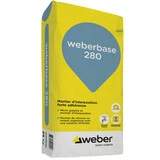
The recommendation focused on installing, before the main render and finishing coats, a high-adhesion technical mortar, Weber Dur 280: “We needed something that would bond perfectly to the substrate,” explains Jorge Meneses. He even carried out pull-off tests: “We embedded the mesh with the mortar, and tried to tear it off in all directions—nothing came off.”
After applying this bonding layer, Jorge Meneses selected a flexible lime-based mortar, Weber Mep Plus, for the base coat render.
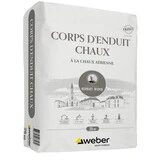
After applying this bonding layer, Jorge Meneses chose a flexible lime-based mortar, a lime render base coat, for the main rendering layer. This product is ideal for rubble stone and brick masonry.
“I am very satisfied with the result: there is no colour difference between the first and second coat, the adhesion is perfect, the drying is even, the render does not blister, and there is no difference between the bonding layer and the base coat.”

The aesthetic proposal
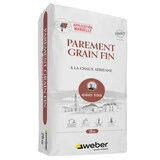
For the final coat, the contractor selected a mineral lime-based finishing render—Weber Cal F—applied with a scraped/pressed finish rather than a traditional scraped texture. This choice initially surprised the client after application, but ultimately led to full satisfaction: “We expected more smooth surfaces, but the light, almost white stone-tone finish suits us perfectly,” explains Jean Mercier.
For the contractor, it comes down to expertise: “The pressed finish requires real skill to avoid grey patches and maintain a consistent light stone-white tone. It’s a truly high-quality solution.”